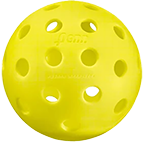

Strong intermediate athletes in racquet and paddle sports often run into a frustrating pattern: the swing feels fine, the intention is clear, and the contact still comes out slightly off. One reason can be visual, not mechanical. In the final instant before contact, the eyes and attention can quietly stop updating and “settle” on a spot just before the ball actually arrives. You’re still watching, but you end up swinging at a predicted ball location, not the real one. That’s the ghost ball problem.
The “freeze point” problem
The classic cue “watch the ball” often gets translated into “stare harder.” That tight, narrow focus feels like precision, but under speed and pressure it can push the brain toward prediction. As coordination demands spike during the swing, attention can lock onto a plausible contact point early and stop truly tracking through impact. At high pace, “close enough” is rarely close enough, and small visual errors become big contact errors.
What elite contact looks like
Top players often appear to stay visually engaged all the way into the hit. Their head looks calm, their posture stays organized, and the moment of contact seems less rushed. Coaches recognize the results: cleaner contact under pace, fewer mysterious mishits, and a steadier paddle or racquet face through impact.
Soft eyes: wide vision, accurate contact
Pickle Juice: The Flow Motion Factor for Pickleball emphasizes “soft eyes,” a broad, relaxed visual field rather than a tense lock on the ball. Soft eyes isn’t “not looking.” It’s seeing the ball inside a wider frame of awareness. That wider frame can reduce the tendency to clamp down, fixate early, and substitute prediction for perception right before contact.
Why softer seeing can be more precise
Hard focus often brings micro-tension in the face, eyes, and neck, and it narrows peripheral information that helps timing and spacing. When the system tightens, it tends to commit early to where contact should happen. Soft eyes keeps perception more dynamic, which can make it easier to stay “with” the ball into impact and produce quieter, more centered contact.
How to spot it and work with it
If you mishit and can’t picture the ball meeting the strings or paddle face, early freezing may be involved. Another clue is the head lifting or attention jumping forward at impact. In warm-up rallies, try a “wide window” cue: keep your gaze broad and relaxed while letting the ball remain central. Many athletes notice that contact centers up when the eyes stop trying to overpower the moment.
The takeaway
Intermediate players often miss not because they aren’t watching, but because their attention freezes a beat too soon. Elite contact often looks calmer and more visually engaged through impact. Soft eyes offers a practical bridge: see wider, stay calmer, and let the ball arrive inside awareness instead of trying to pin it to a guessed location.


0 Comments